For enterprises ready to move beyond AI experimentation — the Director who leads the programme and builds the systems.

I am an enterprise transformation leader with twenty years delivering at scale — payments infrastructure at HSBC, large-scale customer migrations at Shell Energy, cloud and cybersecurity programmes at JLR and Lotus. Across each of these, the value I created came from the same instinct: removing silos, connecting the right problems to the right solutions, and making complex technology actually land inside organisations that needed it to work.
What has always set me apart is the ability to join the dots — across business, technology, and people — in ways others struggle to see. What's sharpened that now is the ability to go further: to translate those connections directly into working agentic systems, and to mentor and enable teams navigating this transition alongside me. Building again, not just directing — and coaching others to do the same.
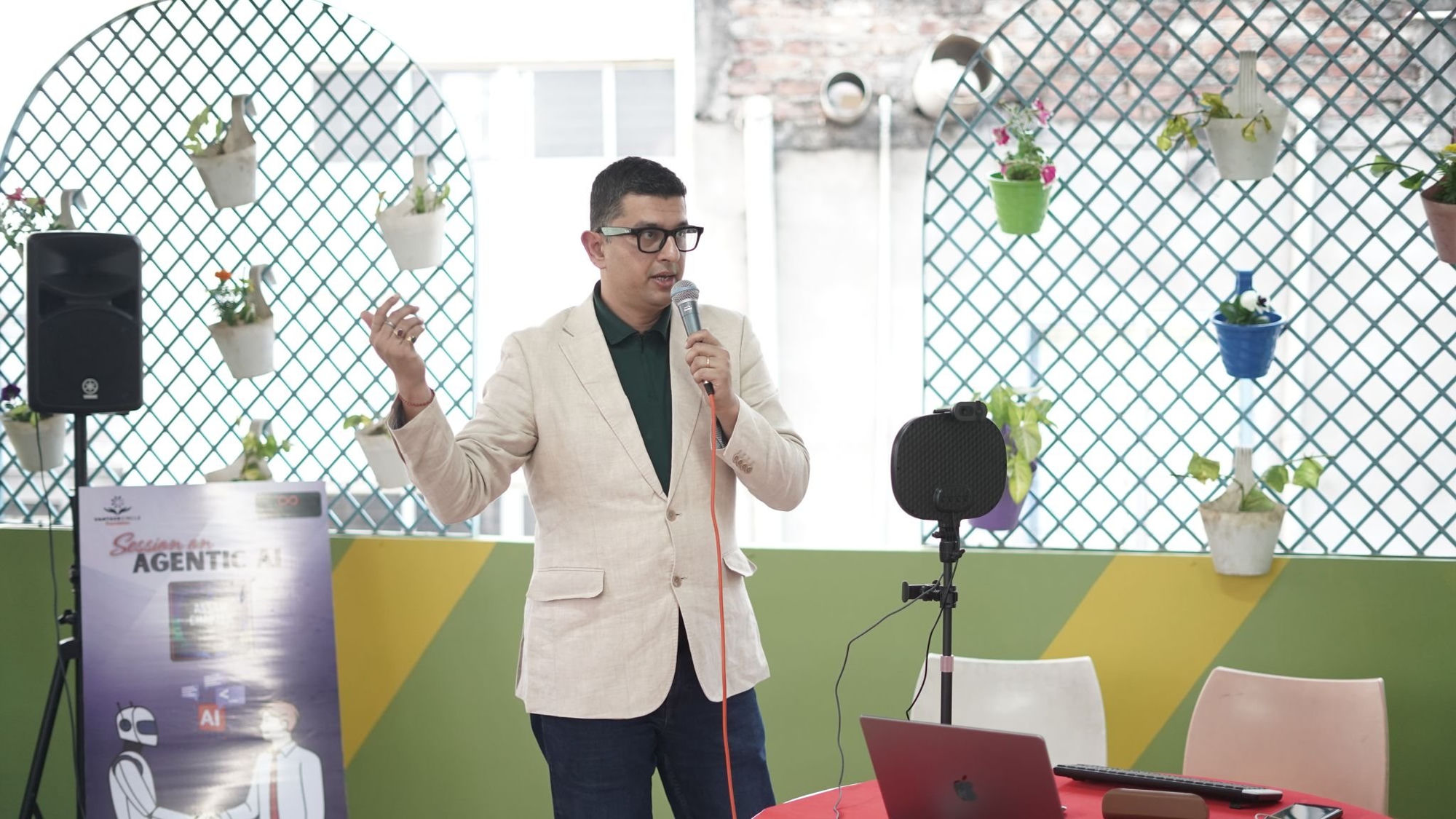
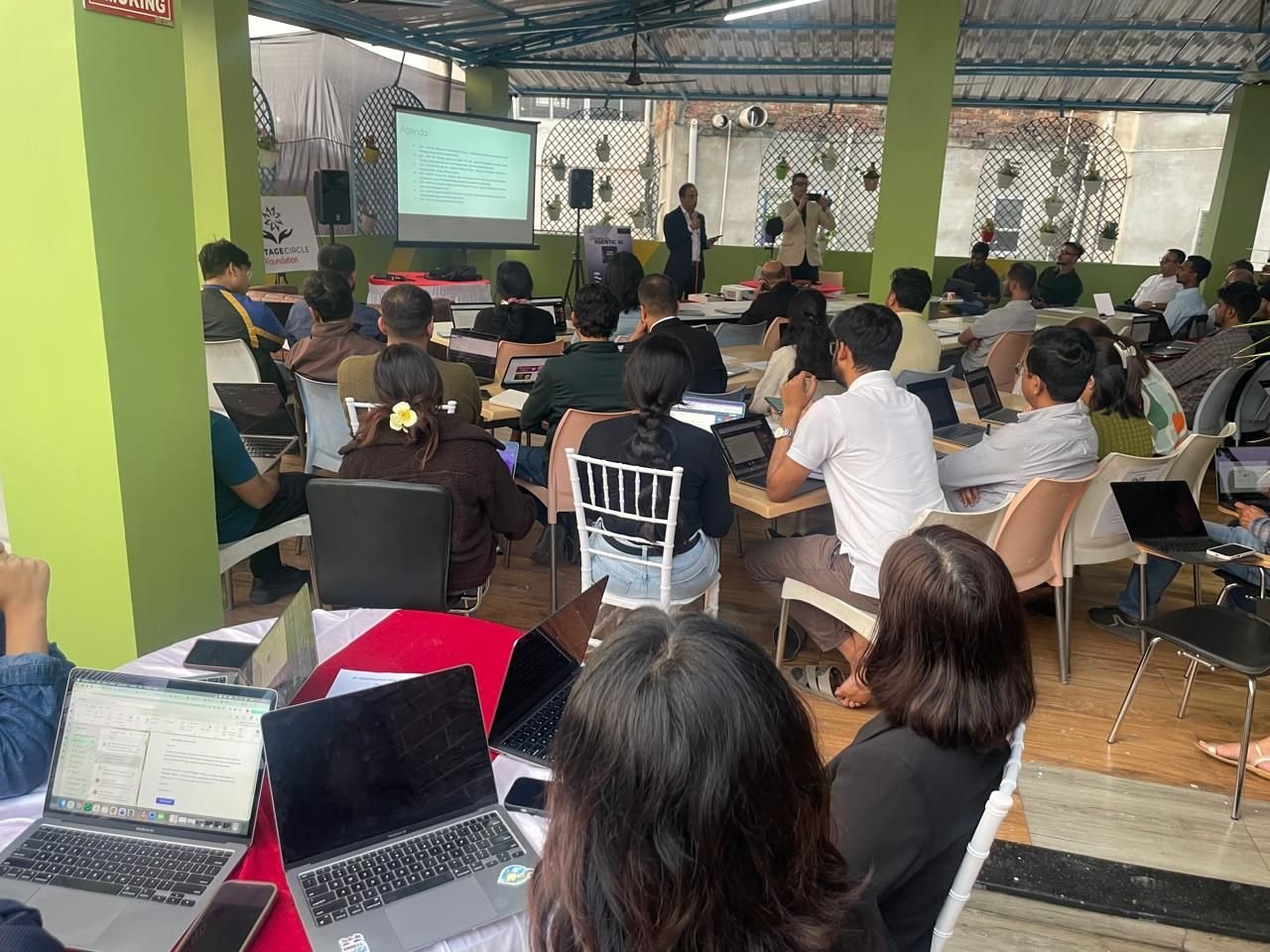
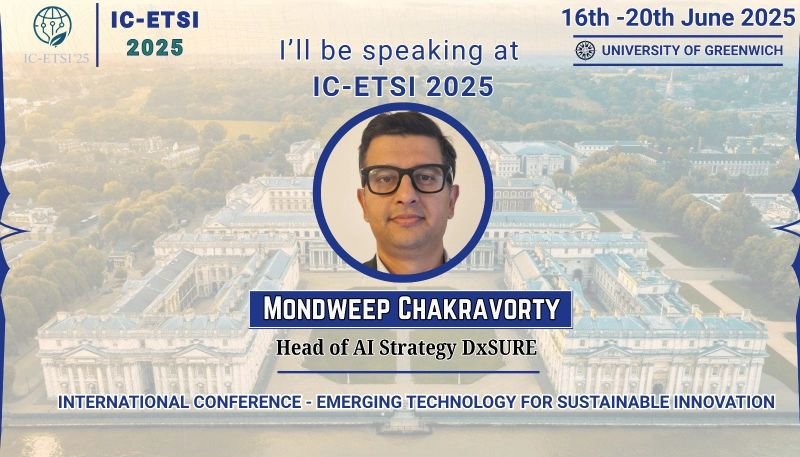
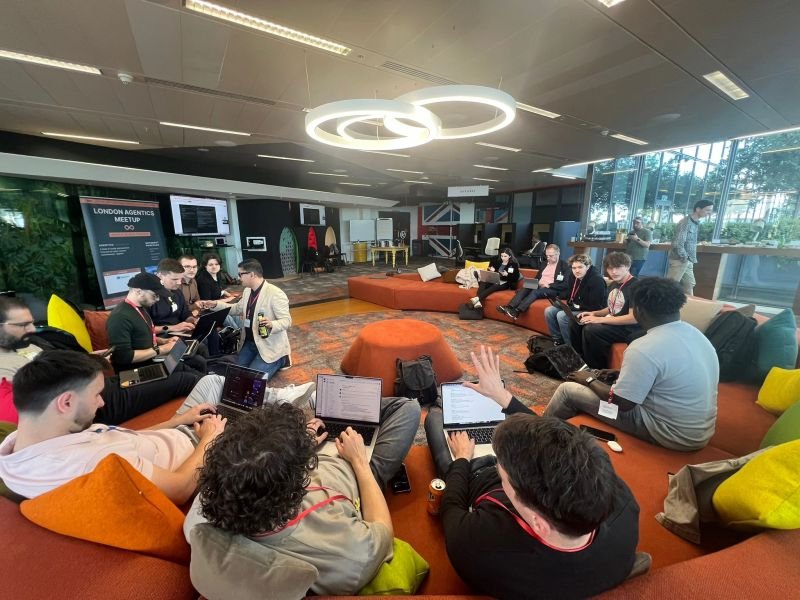
Today through DxSure, I work at the intersection of enterprise credibility and agentic AI — advising, solution-architecting, building, and coaching. I co-founded the Agentics Foundation London Chapter, mentor professionals on the Johns Hopkins Agentic AI programme through Great Learning, and support designers, product managers, and entrepreneurs building their first AI products through 021.events — whose programmes are certified by Northeastern University. I maintain an open build-in-public lab — exploratory branches across agentic AI, genomics, IoT, trading systems, and more. All public, all in progress.
From payments engineer to enterprise AI builder — the same instinct, operating at increasing altitude.
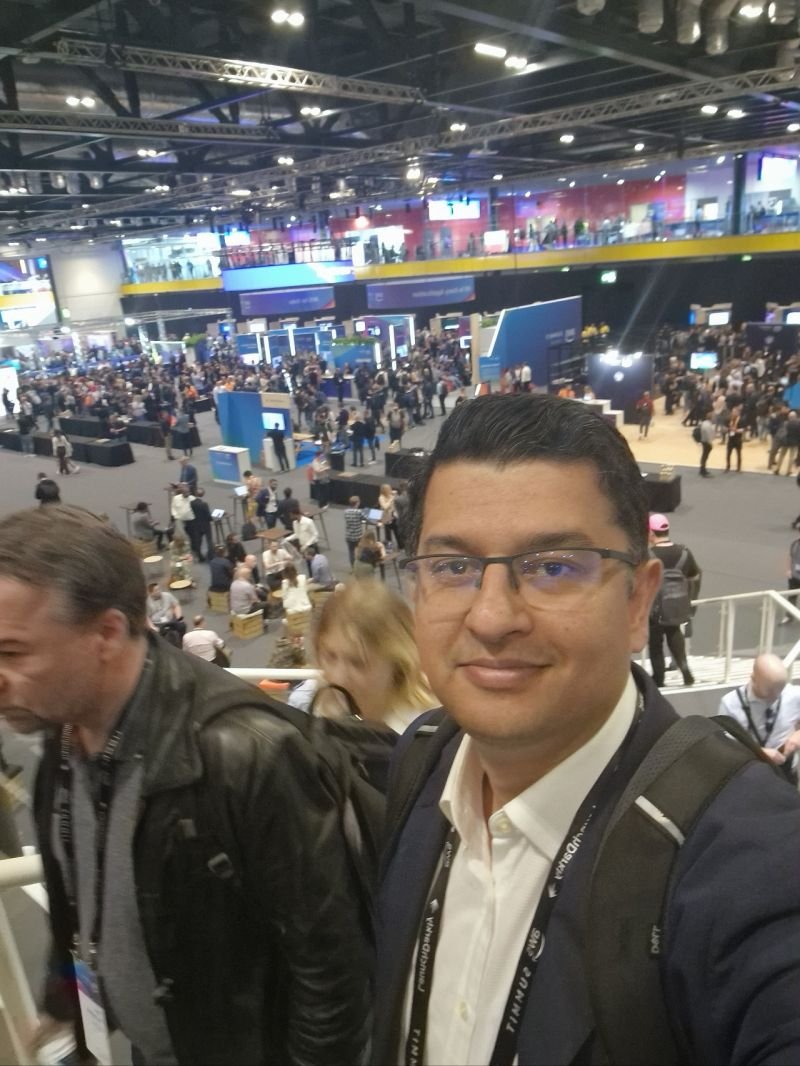
NIT Calicut was a melting pot. Students from every corner of India, each carrying different cultural assumptions, communication styles, and ways of working. Over four years, I developed something that would quietly shape everything that followed: an instinct for aligning across difference — weaving diverse cultural norms into a shared operating style rather than working around them. Alongside that came persistence and self-reliance, earned through the particular pressure of being far from home and having to figure things out.
It was not the most obvious preparation for a career in enterprise technology. But it turned out to be exactly the right one.
At HSBC, I built competence across 15+ core banking systems — not by becoming the deepest expert in any single one, but by forming a broad picture across systems, architectures, and business rules that allowed me to see how they connected. I built relationships with business and technical teams simultaneously, which gave me access to a kind of understanding that specialists on either side rarely had. That combination — the broad view, the cross-functional relationships, the ability to hold complexity across domains — allowed me to design, validate, and help launch a novel global payment system critical to the bank's operations.
When peers began coming to me to propose and lead complex integrations, and when my superiors began expanding my responsibilities, neither felt like a surprise. It was the natural expression of what I had always done: see the whole picture, find the connections others missed, and make disparate things work together.
The instinct had a name now. And it had a direction.
The MBA at London Business School was a deliberate choice. Not a retreat from the technical world, but a decision to operate more fluently within the business one. The instinct to join the dots was already established. LBS gave it a sharper language — strategy, commercial logic, stakeholder dynamics — and a network that opened doors to a different class of problem.
What followed was a sequence of progressively larger, more complex engagements, each one testing the same instinct at a higher altitude.
At Shell Energy, I managed the technical migration of 350,000+ broadband customers from Post Office — a programme spanning over a hundred people, a multi-million pound budget, and nine-figure first-year revenue on the line. The complexity was not primarily technical. It was organisational: creating conditions for different workstreams and stakeholders to actually collaborate — removing blockers, applying a bias for action over perfection, and establishing short cycles of discovery, action, and retrospective that kept value flowing. Alongside this, I managed delivery of a multi-million pound CRM programme — work that formed part of an engagement recognised as a 2021 Management Consultancy Award finalist.
At JLR, the outcome was a portfolio reduced to ten value streams, over £100M removed from the projected budget, and a clear mandate to move forward. A parallel cloud adoption programme resulted in tens of millions in annual productivity gains.
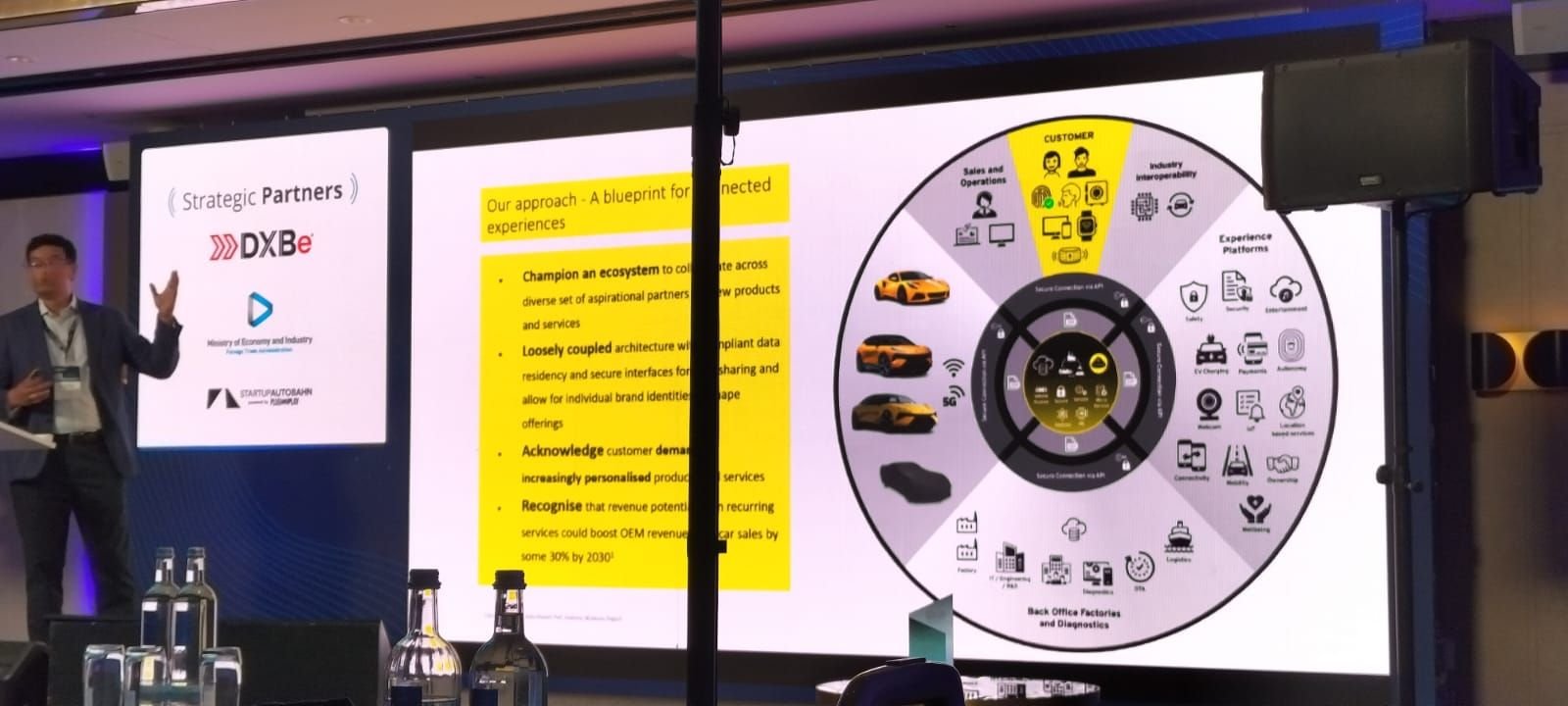
At Lotus, I operated at the boundary between technology and business strategy — securing significant seed investment from partners, aligning stakeholders across China and EMEA, and building a business case for over £150M of value in customer experience innovation. The programme had ambition and momentum. It had my best work.
And yet, across all of it, something was becoming more distant. The systems I had once configured and connected directly were now several layers removed. The broad picture was sharper than ever. The making of things was further away than it had ever been.
At Lotus, I secured significant seed investment from partners and refined a business case projecting over £150M of value — innovative customer experiences woven into and around the car, across travel, ownership, infotainment, and lifestyle. Stakeholders across China and EMEA were aligned. The partner network was engaged. The programme had real momentum.
Then the macro-economic climate tightened. Investment slowed, and the pace we needed to reach market was no longer available. The concepts, however well-articulated in reports and presentations, couldn't hold their ground when budgets came under pressure.
That is where the realisation landed. A working prototype — something stakeholders could see, interact with, and validate — would have changed the risk calculus entirely. Budget conversations are different when something is already running. User confidence is demonstrable rather than projected. Speed to market stops being a slide and becomes evidence.
The report and the presentation, however polished, could not do that work.
It was not a failure of vision or strategy. It was a gap in method. Traditional programme management is ultimately a discipline for overseeing the building of things — not for building them. The distance between a compelling business case and a credible working prototype is where programmes die.
That is when I understood that lean, frugal, incremental build-and-verify — applied to even the most complex or novel ideas — is not just a preference. It is a different class of advantage.
The answer to the gap The Pivot exposed wasn't immediately obvious. Building credible working prototypes — quickly, frugally, iteratively — requires a different kind of capability to programme oversight. It requires someone who can make things. And the path back to making things, after years of operating at the programme and strategy layer, is not trivial.
Generative AI changed those conditions.
The learning curve that had separated me from hands-on building compressed dramatically. Not just in theory, but in practice. The distance between a concept and a running prototype was measured in days rather than quarters.
What followed was not a pivot towards something new. It was a return to something I had always been. The engineer at HSBC who realised his natural talent was configuring and integrating systems, following a problem trail until novel connections revealed themselves, finding ways to make disparate pieces work together that others hadn't seen. That instinct had never left. It had just been operating at a different altitude.
Now it could operate at both at once.
The combination that emerged — twenty years of enterprise delivery, C-suite advisory credibility, and the ability to build working agentic systems directly — is not a common one. Most enterprise leaders delegate the building. Most builders lack the enterprise context. The return to hands-on work didn't diminish the years of programme delivery. It completed them.
DxSure became the vehicle for putting the combination to work.
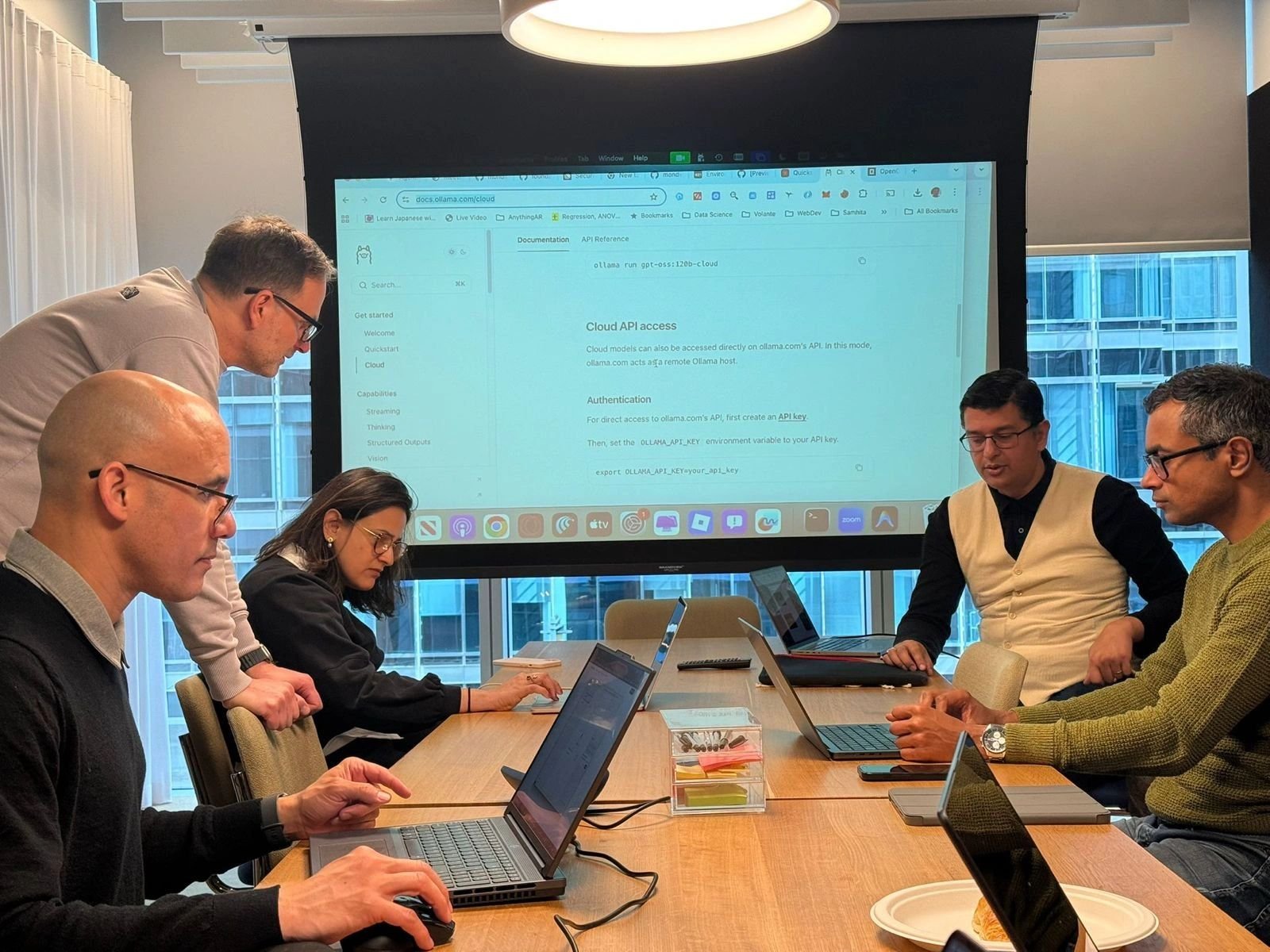
Through it, I work with organisations at the moment they are trying to move from AI curiosity to agentic systems that actually do something useful. For a commercial vehicle safety client, that meant standing up an AI-powered code review pipeline, aligning cloud infrastructure, and mentoring a junior team member toward technical ownership — all while establishing the delivery visibility and traceability that a vendor-led platform with multi-million pound revenue implications demanded. For PE firms, it meant solution-architecting an agentic deal workforce: compressing due diligence timelines, reducing third-party spend, and presenting a credible system vision. For UK water utilities, it meant designing and validating an intelligent automation pipeline that reduced processing time from hours to minutes across thousands of customers.
The join-the-dots instinct — operating now in agentic AI territory.
In parallel, Vibe Cast became the open lab. A public repository of exploratory branches — agentic AI frameworks, algorithmic trading, genomics, IoT, multimedia, regional cultural technology. Some are finished. Some are abandoned experiments. All of it is visible. The point is not any individual project — it is the disposition: build, learn, show the work, share the dead ends alongside the progress. See what others say about working with me →
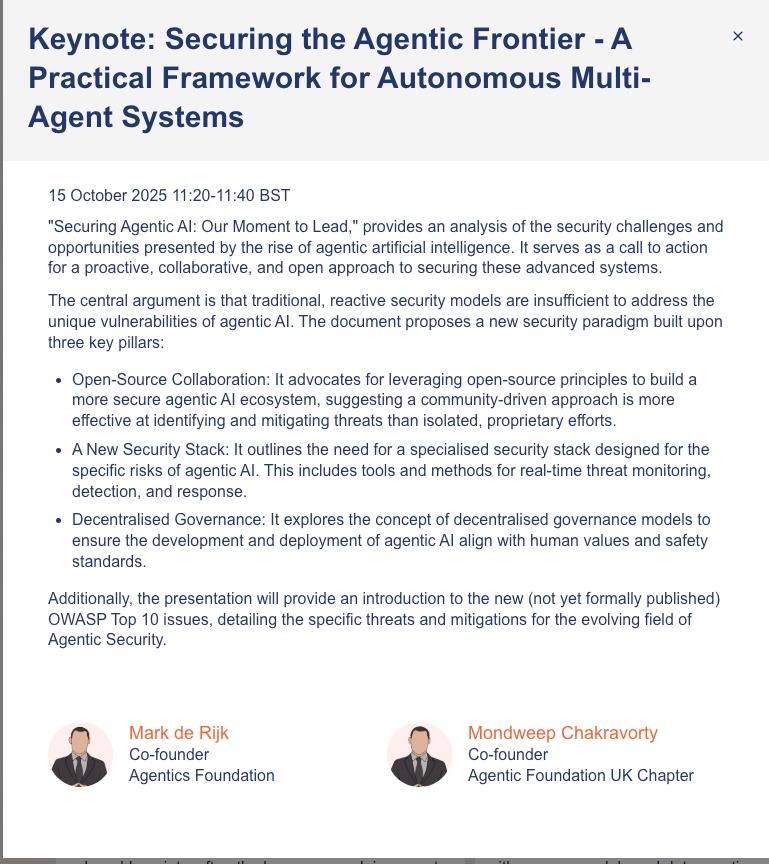
The Agentics Foundation London Chapter — 115+ professionals, focused on trustworthy, practical adoption of agentic AI. At the CISO London Summit 2025, I co-delivered a keynote — Securing the Agentic Frontier — bringing OWASP's MAESTRO framework to life through live vulnerability demonstrations to over 150 senior security executives, and introducing the (then unpublished) OWASP Top 10 for Agentic Security.
And through mentoring on the Johns Hopkins Agentic AI programme, I found something I had not anticipated: helping others navigate agentic AI for the first time was sharpening my own thinking at least as much as theirs.
That is where the coaching identity began to emerge. Not as a replacement for building. As its natural extension.
The problem most organisations have with agentic AI is not a technology problem. The tools exist. The models are capable. What is missing is the bridge between what is technically possible and what an organisation can actually adopt, trust, and build on.
That bridge requires two things that rarely sit in the same person: the hands-on ability to build working agentic systems, and the enterprise delivery credibility to navigate governance, risk, business cases, and stakeholder alignment. Most builders lack the latter. Most enterprise leaders lack the former. The gap between them is where AI initiatives stall — not because of the technology, but because of the translation.
That is the gap I work in.
The goal is never to build AI for its own sake. It is to help organisations develop the instincts and capability to do it themselves — designing systems they can understand and extend, building in ways that transfer knowledge rather than create dependency, and coaching the people inside those organisations who will carry the work forward.
There is something that comes full circle here. The instinct developed at NIT Calicut — aligning across difference, finding common ground across diverse assumptions — turns out to be exactly what agentic AI adoption requires inside complex organisations. It is always a human problem before it is a technical one. The technology is rarely the hardest part.
What I am building toward is a way of working where enterprise delivery rigour and agentic AI capability are not separate disciplines but a single integrated practice. Lean enough to move fast. Credible enough to earn trust. Honest enough to distinguish clearly between a validated proof of concept and a production-ready system — and to say so plainly.
The journey is not finished. But it is deliberate.
Across twenty years — clients, directors, and partners from HSBC to JLR to Shell Energy.
Verifiable proof-points. Expand any card to see methodology and data sources.
Chapter established January 2025. Member count from chapter management platform reflecting registered professionals across enterprise, startup, and research communities.
Programme delivery of a multi-million pound CRM transformation at Shell Energy, delivered in partnership with PwC — covering Salesforce Sales Cloud, Marketing Cloud, and Interaction Studio implementation with new agile ways of working.
Active mentor on the Johns Hopkins University Agentic AI certificate programme, supporting experienced professionals through specification-driven AI development and zero-to-one agentic system practices.
Keynote: "Securing the Agentic Frontier — A Practical Framework for Autonomous Multi-Agent Systems", co-presented with Mark de Rijk (Co-founder, Agentics Foundation) at the Rela8 Group CISO London Summit 2025, 15 October 2025. Addressed the security challenges and opportunities of agentic AI — open-source collaboration, a new agentic security stack, and decentralised governance — and introduced the (then not yet formally published) OWASP Top 10 for Agentic Security.
Applied OWASP's MAESTRO framework to ElizaOS, mapping exploitable risks across seven architectural layers and demonstrating vulnerability scenarios live to an audience of ~150 senior security executives.
Public GitHub repository where exploratory branches are the unit of work — each one a prototype, experiment, or learning in progress. Spans agentic AI frameworks, algorithmic trading, genomics, IoT, multimedia, and regional cultural technology. The point is transparency and disposition, not scale.
Led the Unifying Global Media Distribution challenge — built a knowledge graph (360k movies, 19 genres, 195 countries, 4.3M relationships) addressing a 40% revenue-loss metadata problem. Projected $160k+ annual revenue per 1M users with 10% error reduction; 10x discovery acceleration; 85% token reduction.
Working systems, not slideware. A selection of live experiments — open to anyone who wants to see how I think by what I ship.
Twenty years of enterprise delivery, combined with hands-on agentic AI engineering.
Practical thinking on agentic AI, enterprise technology, and building at the frontier.
Events, workshops, and communities where ideas become practice.
I'm looking for a permanent Director or VP role in enterprise AI and transformation — inside a large corporate where I can lead programmes, build internal capability, and deliver lasting change. If that sounds relevant to a role you're hiring for, let's talk.
For interim: the mandate needs to be strategically meaningful, genuinely senior, and worth the trade-off against a permanent commitment.
If you know someone hiring for senior AI leadership — or someone who should — feel free to share this page or forward this sentence:
Targeting VP / Director roles in enterprise AI, transformation, and technology strategy. Primary focus is permanent, in-house. Open to interim where the mandate is strategically meaningful and genuinely senior.
Prefer to reach out directly? Leave your details and I'll get back to you.